

E-axle EMC testing
e-axle EMC testing represents a significant advancement in the field of electric vehicle technology, offering a compelling alternative to the independent e-motor drive systems commonly found in many first-generation electric cars. In the latest iterations of the e-axle, the e-motor, reducer, and power electronics are integrated into a single compact unit. This integration yields numerous benefits, including enhanced performance, reduced costs, improved efficiency, and valuable space savings within the vehicle design.
However, to ensure the reliability and safety of these systems, comprehensive electromagnetic compatibility (EMC) testing is essential for identifying and mitigating any potential electromagnetic interference (EMI).
One of the unique challenges associated with e-axle EMC testing stems from the presence of two output shafts, particularly when the reducer incorporates additional controllers. This complexity requires careful consideration during the testing process to ensure that all components operate harmoniously without causing disruptions to the vehicle’s electrical systems.


A practical solution to address this challenge involves loading the e-axle assembly with two separate load machines. This approach allows for independent control of torque and speed variations for each output shaft, which is crucial for simulating realistic driving conditions.
By employing two load machines, engineers can effectively test the e-axle’s performance under various scenarios, ensuring that both output shafts can handle the demands placed upon them during operation. This method not only provides a more adaptable testing setup but also contributes to a thorough evaluation of the e-axle’s interaction with the vehicle’s overall electrical architecture.
Through meticulous e-axle EMC testing, manufacturers can verify that the e-axle performs reliably while maintaining compatibility with other electrical systems in the vehicle. This testing process is vital for ensuring that the e-axle meets stringent industry standards for electromagnetic emissions and immunity, ultimately leading to safer and more efficient electric vehicles.
Stationary e-axle EMC testing for CISPR 25 and ISO 11452-2
E-axle EMC testing is a specialized process designed to assess the electromagnetic compatibility of e-axle assemblies within a controlled environment. The stationary e-axle EMC testing solution is highly customizable, with chamber dimensions tailored to accommodate the specific sizes and performance characteristics of the e-axle units being tested. While the core test and measurement instruments remain consistent, the mechanical support structures for the e-axle and connecting bearings vary based on the required maximum speed and torque.
In this setup, the stationary e-axle EMC testing equipment is positioned at a right angle within the chamber, allowing it to accommodate both e-axle assemblies and single e-motor. This versatility is crucial for conducting detailed evaluations of e-axle systems.
A key feature of the dual-load stationary testing setup is its ability to simulate real vehicle drivetrain conditions accurately. The differential is neither locked nor welded, and the output shafts can be replaced with the vehicle’s half shafts, ensuring realistic operational scenarios. Additionally, the wheel spacing can match that of the actual vehicle, enhancing the authenticity of the testing environment.
This sophisticated system can achieve maximum speeds of 12,000 rpm and rated torques of 1,200 Nm, typical for passenger car e-motors. The ability to replicate such high-performance specifications during e-axle EMC testing is essential for evaluating the reliability and performance of e-axles under real-world conditions.

| Model | Rated power (kW) | Rated torque (Nm) | Max. speed (rpm) |
| EMC-A01 | 350 | 1,200 | 12,000 |
| EMC-A02 | 370 | 3,500 | 3,000 |
EMC-A01

EMC-A02

E-axle EMC testing employs stationary testing equipment that can be customized to meet the specific load machine parameters required by the user. This flexibility allows for precise alignment with the performance characteristics of the e-axle units being evaluated. A key feature of this customizable system is the ability to design the half shafts on both sides of the drivetrain to be insulated from the ground, effectively simulating the conditions of vehicle tires, which are also insulated. This replication of real-world dynamics enhances the accuracy of the testing environment, ensuring that the e-axle is assessed under conditions that closely mirror its actual operational scenarios.
Additionally, the system can remove the low-speed axle side shaft, enabling high rotational speed e-motor testing. This modification is crucial for evaluating the e-axle’s performance at maximum speeds, allowing engineers to gather important data on its behavior and electromagnetic compatibility. By accurately simulating real vehicle conditions, these enhancements in e-axle EMC testing provide valuable insights into the performance and reliability of e-axles. This thorough assessment ensures that manufacturers can meet stringent standards for electromagnetic emissions and immunity, ultimately contributing to the safety and efficiency of electric vehicles.
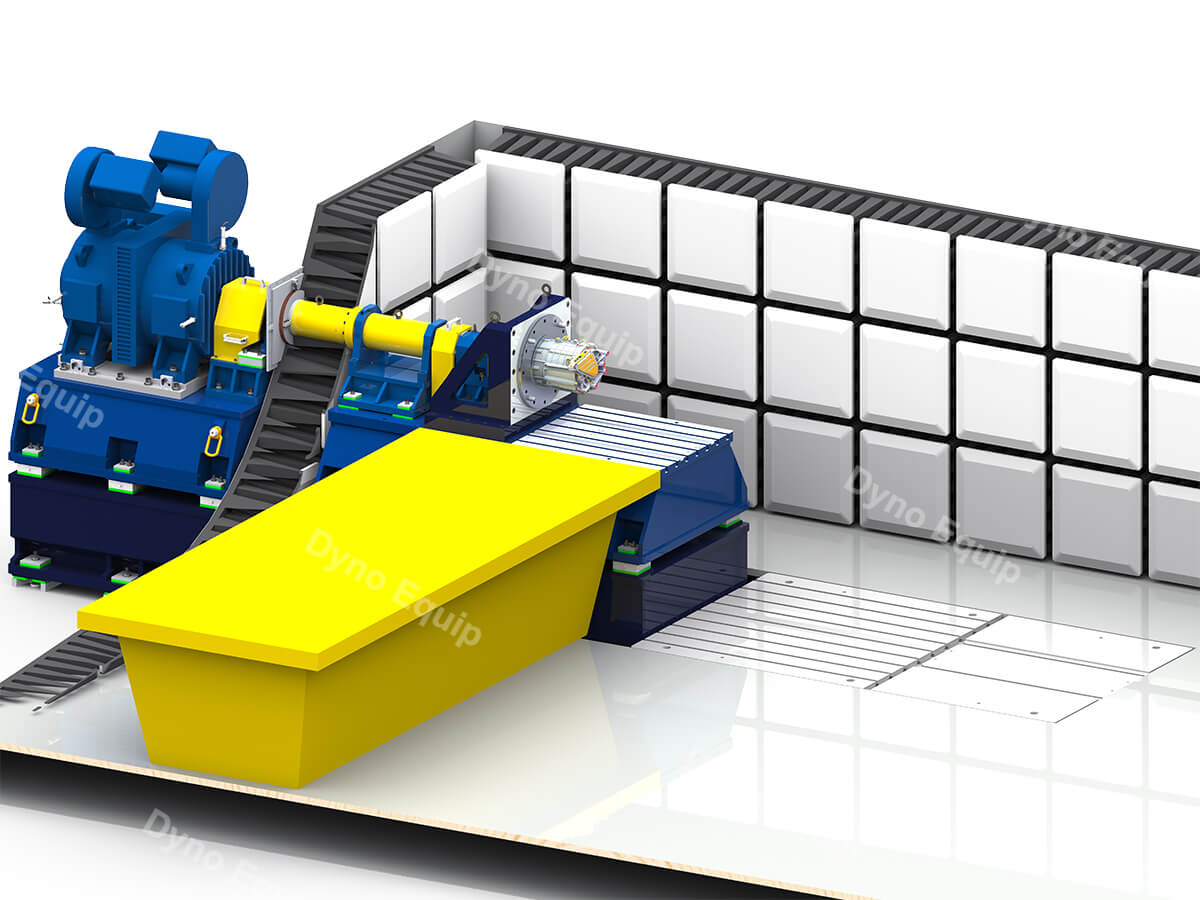
In e-axle EMC testing, the implementation of dual-load machines is crucial for accurately simulating the operational conditions of e-axles. However, when space is limited within the anechoic chamber, a right-angle gearbox adapter serves as an effective solution. This adapter allows for the configuration of the load machinery at a right angle, significantly reducing the overall footprint of the testing setup without compromising the testing environment.
By facilitating the connection between the e-axle and the dual-load machines, the right-angle gearbox adapter is essential for conducting comprehensive evaluations under realistic driving conditions. This innovative solution minimizes alignment issues, which is particularly important when dealing with high rotational speeds and torque levels, ensuring that engineers can efficiently utilize available space while obtaining accurate and reliable data on the electromagnetic compatibility and overall performance of e-axles.

Mobile e-axle EMC testing
Mobile e-axle EMC testing offers significant advantages, particularly in its ability to conduct full-load electromagnetic compatibility (EMC) testing within existing EMC anechoic chambers without requiring extensive modifications.
The transportable system enhances efficiency by allowing for thorough pre-setup outside the chamber, followed by easy transfer into the testing environment. This mobility ensures that EMC testing can be performed without compromising the torque or speed of the Unit Under Test (UUT), making it a versatile solution for manufacturers.
The mobile e-axle EMC testing system features a modular structure, with each unit designed for easy mobility. When testing is required, operators can simply push each unit of the load machine into the designated position within the anechoic chamber. This straightforward docking and locking mechanism allows for rapid setup, enabling tests to commence quickly.

Additionally, key components such as the inverter, cooling system, and battery simulator are strategically located outside the chamber. They connect to the junction box inside the chamber through filters, ensuring clean electrical connections while minimizing interference. The connection to the load machine is facilitated by quick connectors, streamlining the setup process.
Moreover, the mobile testing system is designed to connect to the drivetrain using half shafts, with axle spacing that closely mimics the wheel spacing of a real vehicle. This spacing is adjustable, allowing for customization to simulate the installation conditions of actual vehicles as accurately as possible.
By replicating these real-world conditions, mobile e-axle EMC testing provides invaluable insights into the performance and compatibility of e-axles, ensuring that they meet stringent electromagnetic standards while enhancing the safety and efficiency of electric vehicles.

| Model | Rated power (kW) | Rated torque (Nm) | Max. speed (rpm) |
| EMC-A03 | 115 | 1,098 | 2,000 |