
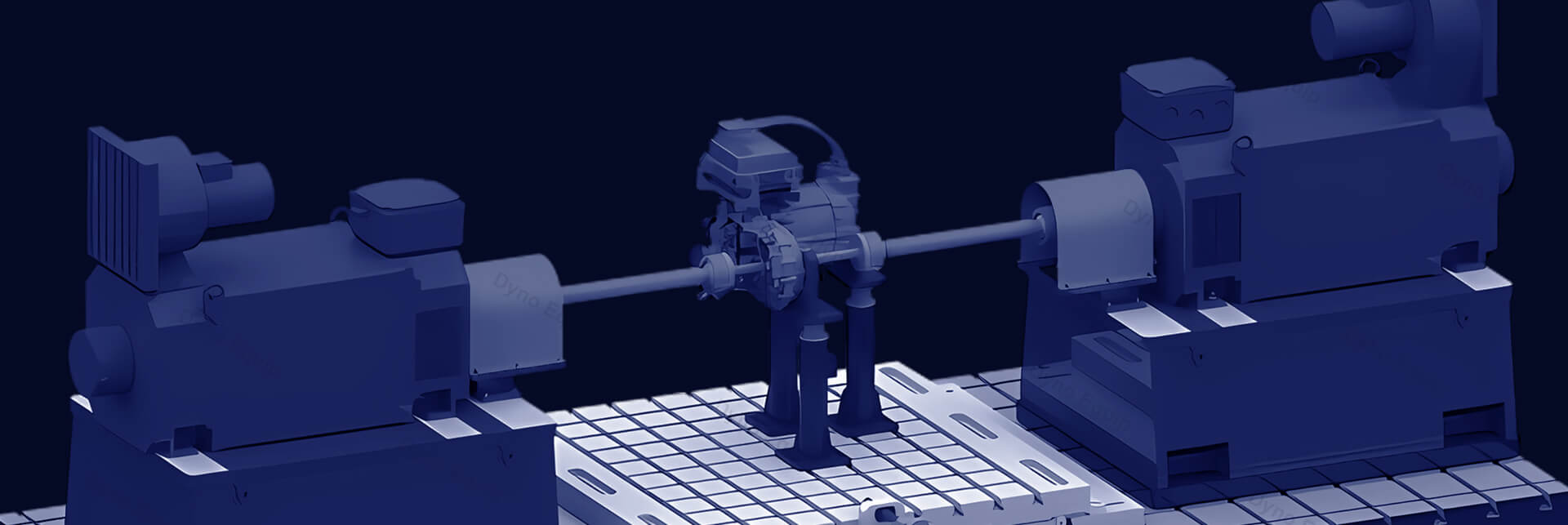
Electric drive unit and electric axle test bench
Both Fuel Cell Electric Vehicles (FCEVs) and Battery Electric Vehicles (BEVs) heavily rely on electric drives, specifically electric drive units, which serve as the primary source of propulsion for these vehicles. The integration of electric drive units with drivetrains into electric axle subsystems offers significant advantages, including improved efficiency and reduced packaging size. By consolidating these components within the electric axle, manufacturers can create more compact and lightweight designs that enhance both performance and energy efficiency. This integration also minimizes the number of mechanical connections and components, leading to fewer potential failure points and increased reliability.
To ensure the reliability and performance of these integrated systems, rigorous testing is essential, and this is where the electric axle test bench plays a crucial role. The electric axle test bench is designed to evaluate the electric drive unit and its associated components under a variety of conditions. Environmental and fatigue testing are particularly important for electric axle certification. Environmental testing assesses how well the electric axle subsystems can withstand extreme temperatures, humidity, and other factors that vehicles may encounter during operation. This ensures that the electric drive unit functions reliably in diverse conditions, which is essential for consumer confidence and regulatory compliance.
Fatigue testing is equally vital, as it evaluates the long-term durability and performance of the electric drive unit within the electric axle under repeated stress and load conditions. The electric axle test bench allows engineers to simulate these conditions accurately, helping identify potential weaknesses or failure points in the integrated system over time. By combining environmental and fatigue testing criteria for electric axle certification, manufacturers can ensure that their electric drive units not only meet performance expectations but also adhere to stringent safety and reliability standards. This comprehensive approach to testing is crucial for the successful deployment of FCEVs and BEVs, ultimately contributing to the advancement of sustainable transportation solutions.
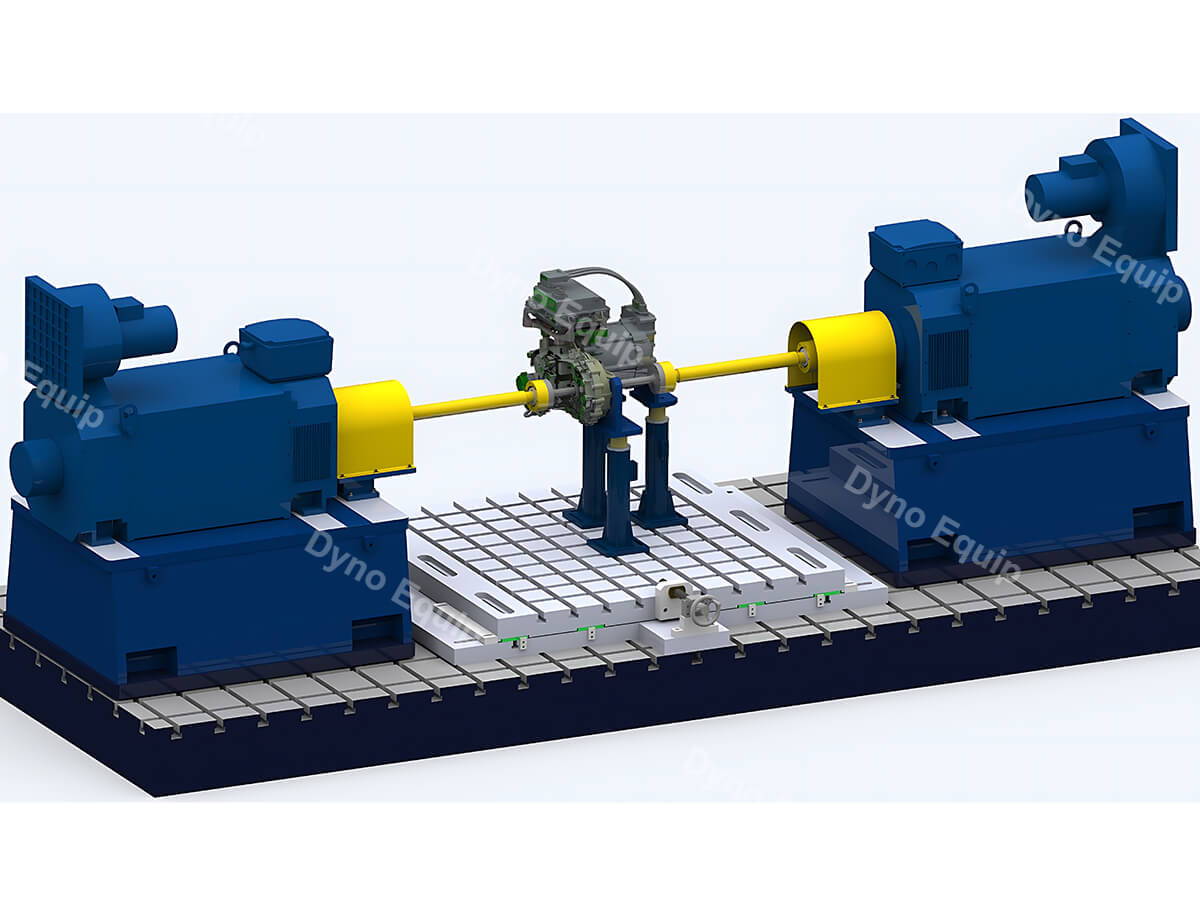
The comprehensive range of 3-in-1 electric axle test benches provided for both light-duty and heavy-duty vehicles addresses critical domains such as performance, durability, noise, vibration, and harshness (NVH), as well as electromagnetic compatibility (EMC). These advanced test benches are designed to support manufacturers in developing sustainable electric drive systems that meet the highest performance and quality standards in the automotive industry. By thoroughly evaluating these key aspects, manufacturers can ensure their electric axles are reliable, efficient, and capable of delivering optimal performance under real-world conditions.
The light-duty electric axle test bench is a customizable solution tailored to the specific needs of manufacturers, whether they are working with single or dual motor configurations. This flexibility allows engineers to develop and validate various light-duty units under test (UUTs) effectively. The test bench is equipped with advanced instrumentation and testing capabilities, enabling comprehensive assessments of the electric axle’s performance characteristics. The design facilitates quick adaptation to different configurations and testing scenarios, ensuring that manufacturers can optimize their electric drive systems for diverse applications.
One of the key advantages of this light-duty electric axle test bench is its rapid delivery time, which allows clients to perform essential in-service lifetime and thermal endurance testing with minimal delay. This expedited timeline is critical for manufacturers aiming to bring their products to market quickly while ensuring that they meet rigorous industry standards. The test bench provides valuable insights through mechanical, electrical, and thermal property analyses, allowing engineers to identify potential issues early in the development process. By conducting these thorough evaluations, manufacturers can refine their designs, enhance durability, and improve overall performance, ultimately leading to the successful deployment of high-quality electric drive systems in light-duty vehicles.
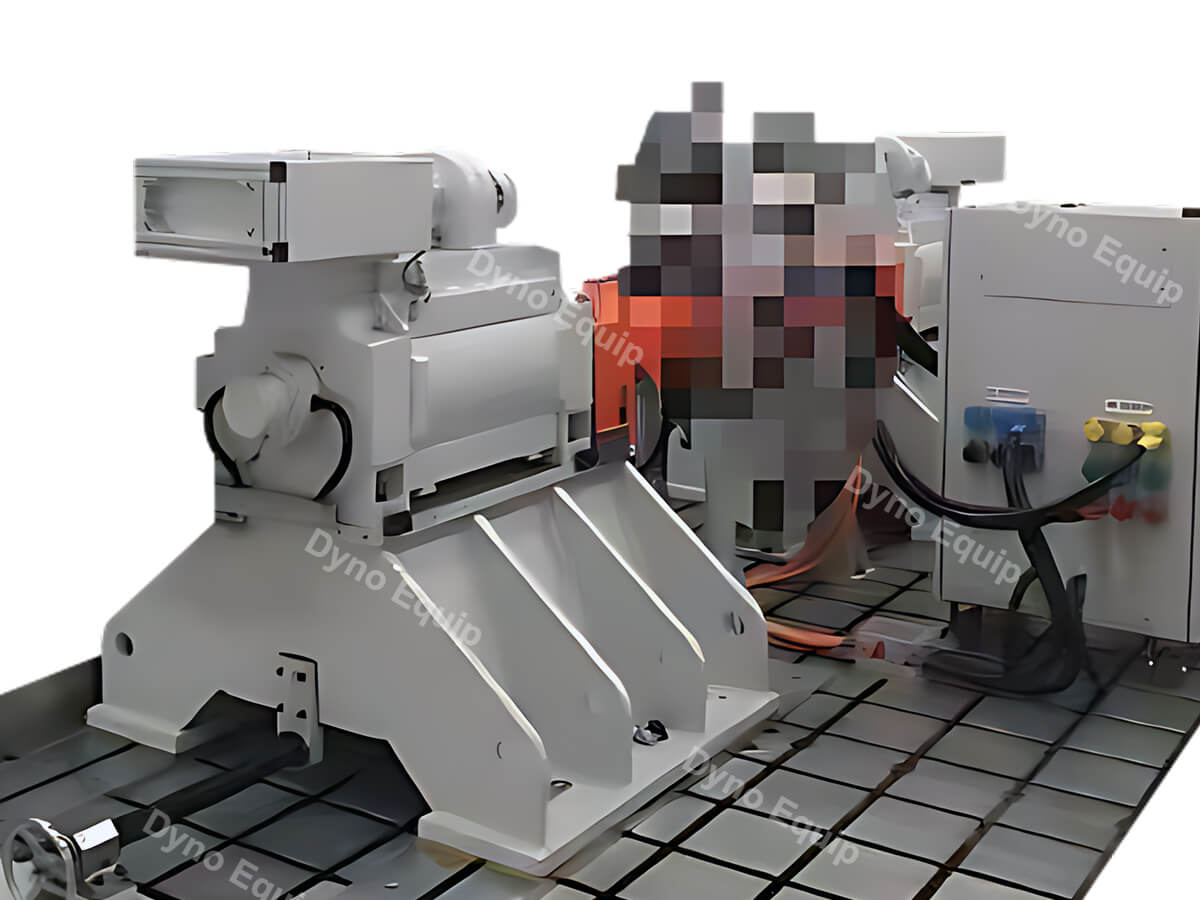
Example of load machine: PPT2
Asynchronous load machine
| Model | Rated power (kW) | Rated torque (Nm) | Max. speed (rpm) | Inertia (kgm2) |
| ATT1 | 400 | 5,000 | 4,500 | 4.4 |
| ATT2 | 350 | 4,200 | 4,000 | 3.5 |
| ATT3 | 300 | 3,700 | 3,500 | 2.4 |
** Parameters can be changed according to customer needs
PM load machine
| Model | Rated power (kW) | Rated torque (Nm) | Max. speed (rpm) | Inertia (kgm2) |
| PTT1 | 300 | 4,000 | 3,000 | 0.85 |
| PTT2 | 250 | 3,000 | 3,000 | 0.62 |
** Parameters can be changed according to customer needs
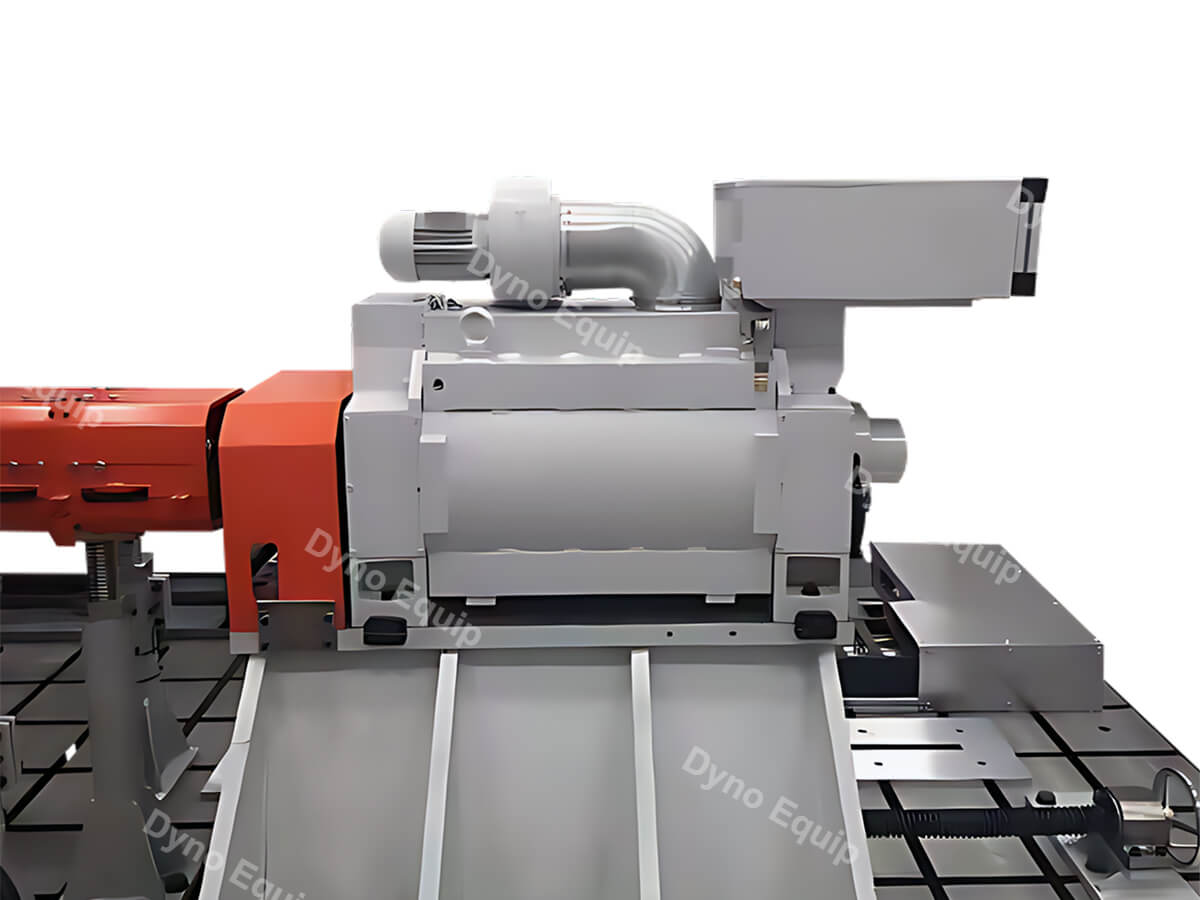
Example of load machine: PPT2
To effectively develop and evaluate the heavy-duty unit under test (UUT) portfolio, the heavy-duty integrated electric axle test bench is designed as a modular system solution. This modularity allows for a highly adaptable testing environment specifically tailored to assess the performance of various electric drive units used in trucks, buses, and off-road vehicles. By offering a scalable solution, clients can conduct productive service-lifetime and thermal endurance testing under conditions that closely mimic real-world vehicle operation. This capability is essential for ensuring that heavy-duty electric axles can withstand the rigorous demands of their intended applications.
The X-in-1 electric axle test bench is specifically engineered to fulfill the requirements for temperature and service lifespan certification of electric drive units. It provides a system that is primed for efficient testing, allowing for the seamless integration of duty cycles with pre-configured standardized cycles for temperature aging and lifespan certification during UUT operation. This flexibility ensures that manufacturers can comprehensively assess the performance and longevity of their electric drive systems, leading to more robust and reliable products.
The optimal operation of the electric axle test bench relies on carefully selected mechanical and electrical testing techniques. The setup includes an integrated control system, two load machines that function as load systems, a conditioning unit, and a DC source that supplies power to the electric drive unit’s electronics. Additionally, a flexible automation system enhances the testing process by enabling systematic testing procedures. This automation facilitates precise measurement and regulation of critical parameters such as torque and speed in a closed-loop system, ensuring accurate and repeatable results.
Advancements in converter technology also allow for the inclusion of a galvanically isolated DC source within a single drive cabinet, which provides power to the electric drive unit’s power electronics. This innovation not only enhances safety but also reduces the overall footprint and grid connection requirements. The compact design of the electric axle test bench allows for easy and quick installation on the industrial floor, eliminating the need for additional pits or specialized technical flooring. This streamlined installation process makes it possible for manufacturers to set up the test bench efficiently, allowing for rapid deployment and testing of heavy-duty electric drive units in a variety of applications.
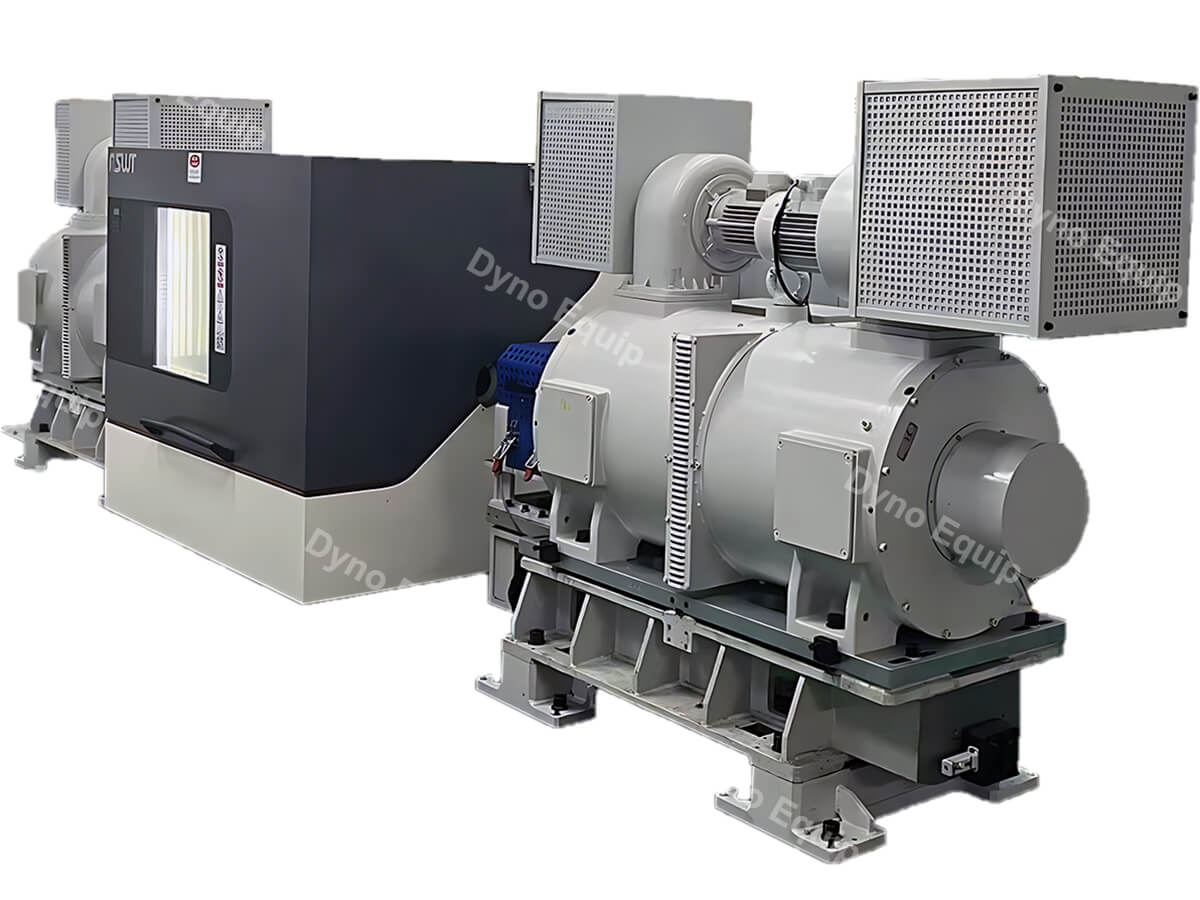
Example of load machine: ATT1
Applications of electric drive unit and electric axle test bench
- Test of service lifespan
- Test with high speed and torque
- Test for torque differential and speed differences
- Test of peak power
- Electrical to mechanical power efficiency test
- Torque interface to electric drive in the no-throttle test
- xCU interface to e-drive for the throttle test
- Test of the driving cycle
- Analysis of vibrations
- Thermal examinations:
- Cooling system stability test
- High-temperature operating endurance (HTOE)
- Powered thermal cycle endurance (PTCE)
Electric axle test bench for NVH tests
Vehicle development is visibly and audibly focusing on noise and vibration as the automotive industry shifts away from combustion engines and CO2 emissions. Future completely electric vehicles are bringing both new chances and problems in the industry. More than ever, NVH (Noise, Vibration, Harshness) and driver comfort are crucial. Our test environment changes with the future drivetrain to provide quick, dependable, and focused development outcomes.
E-drive unit testing may be conducted in excellent acoustic test conditions thanks to DynoEquip’s competence with NVH testing of driveline systems. The electric drive unit test bench for NVH tests was created as a result. For acoustic measurements, this method ensures the lowest possible noise levels while in operation to provide a high signal-to-noise ratio or SNR. Furthermore, the simulation-optimized design of the sophisticated driveline for EDU NVH rig guarantees optimal NVH performance with low sound reflections. Moreover, the rig may be obtained as a fully personalized test solution or as a standard solution, ranging from specific parts to entire cars.
For both light-duty and heavy-duty solutions, the electric drive unit test bench for NVH tests redefines comfort and quietness. Semi-automatic trackwidth and wheelbase adaptations provide high-end NVH development capabilities with very low operational noise levels. Redefining the criteria for NVH engineering on the current and next electric drivetrain is the solution.
We design all parts and acoustic enclosures using simulation-optimized design to guarantee optimal NVH performance with little sound reflections. The goal is to make the test rig component as simple to handle as possible. It is straightforward to adjust to various UUT sizes because of adjustable loading units. Acoustic enclosures with hinges also guarantee simple access to servicing areas.
Sitemap