Advanced hybrid, EV test stands, e-mobility dynamometers
From standalone measurement tools and software to testing solutions for internal combustion engines or hybrid propulsion systems, fuel cells, automated and connected mobility, and EV test stands for electric vehicle, DynoEquip has the expertise to support the optimization of customers’ testing and validation programs. For the development, testing, and validation of any kind of electric powertrain, from individual parts to complete systems, we provide comprehensive expertise and all-inclusive solutions.
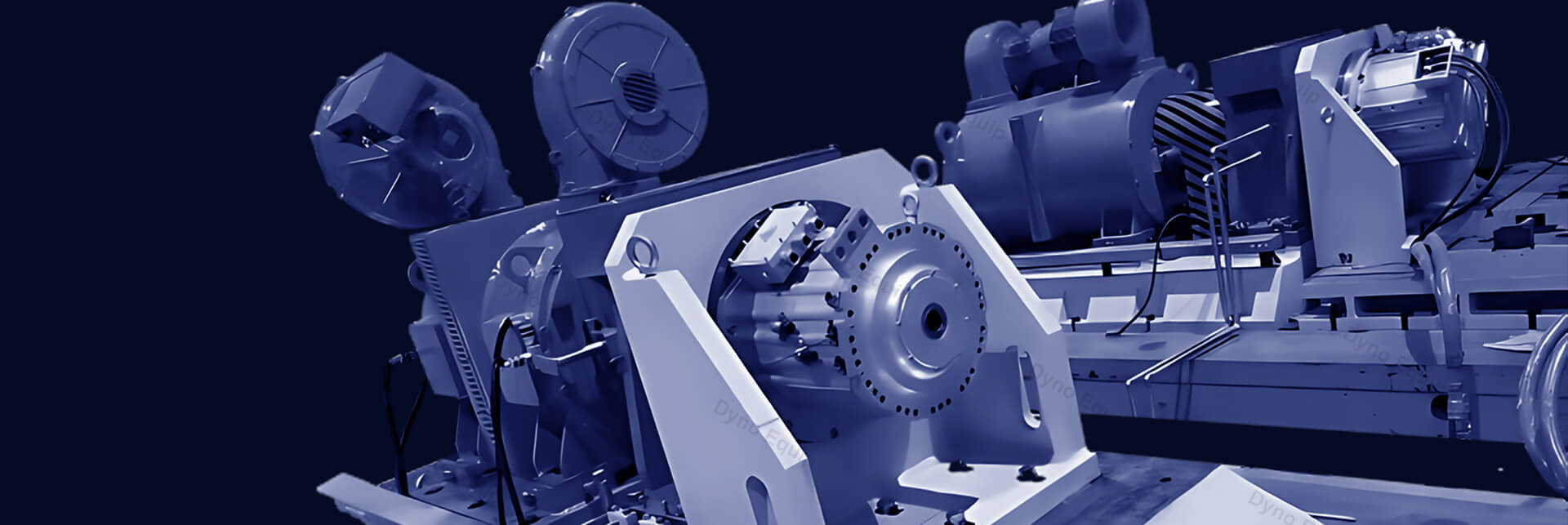
DynoEquip developed a new line of dynamometers for e-mobility to assess electrified driveline systems. The features and attributes of these solutions align with the client’s continuous performance enhancements through their in-progress technological solutions. Our offering covers the whole toolchain, from software validation to various component test systems, such the powertrain system integration test environment, to the production testing solution and the tools for field testing the finished automobiles.
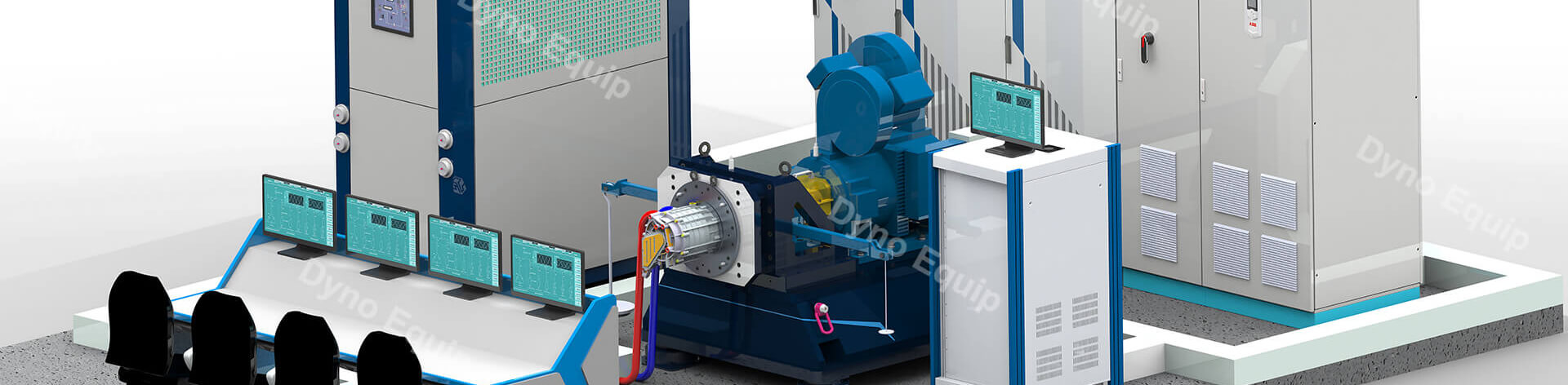
AC dynamometer
Improved performance, reduced emissions, and efficiency are criteria set by the market and international regulations, which testing and development processes must help OEMs meet. The dynamometer for e-mobility must enable the best development design, regardless of how large or how EV battery-electric, mild hybrid, fuel cell, or any other type of powertrain is set up. This comprises assisting the customer in keeping up with a rapidly evolving industry and enabling the production of innovative products in both a proactive and reactive manner. Future-proof and designed to withstand years of reliable use, our products are built to last.
A wide range of market areas and applications are catered for by these superior products. DynoEquip offers two types of products: AC induction load systems (AC dynamometer) and AC permanent magnet synchronous load systems (PM dynamometer). These products are assured to provide very dynamic and efficient performance. Everything from original exhaust systems to configurations with special criteria for noise, vibration, and harshness (NVH) to the greatest speed requirements may be accommodated.

High-speed EV motor dynamometer and test stand
To guarantee a quick and dependable testing procedure, an electric vehicle e-motor test stand needs to meet a number of specifications. A complex test system design is required when testing units under test (UUTs) with varying performance levels in terms of power, current, voltage, speed, torque, and different technologies, such as electric excited synchronous motors (EESM), permanent magnet synchronous motors (PMSM), and asynchronous motors (ASM). It is crucial to frontload tasks in order to expedite the development process of e-mobility and guarantee a seamless integration of the e-drive system into the car in the future. However, the various stages of the development process present unique difficulties that our e-motor testing portfolio may allow you to effectively navigate.
In order to determine and analyze electrical, mechanical, and thermal parameters, DynoEquip’s electric vehicle e-motor performance test stand serves as a comprehensive development, testing, verification, and validation environment for electric drives. Dynamometer software may be used to maximize the efficiency or NVH of any type of e-drive system.

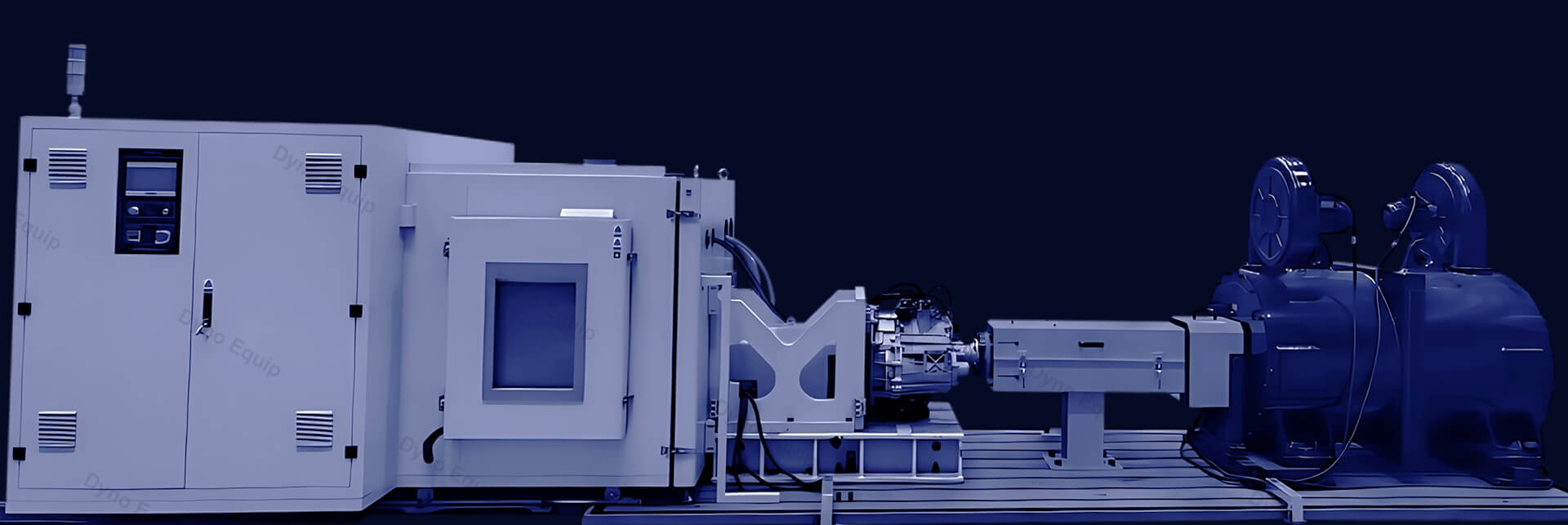
Transmission and reducer test stand
For novel propulsion system concepts of e-mobility, automakers and suppliers are creating relevant systems and components. The data pertaining to internal combustion engines are used to define the criteria for a drive of transmission. The drive dynamometer has to include the data for electric drives as well, as in pure electric vehicle or hybrid propulsion systems, the change is from transmission to reducer. In comparison to internal combustion engines, this implies that e-motors have faster speed, smaller, and have more design options.
The cutting-edge and well-respected products, which include automation software that supports a broad variety of applications and drive and load dynamometers for various speed and power classes, form the foundation of the electric drive reducer testing solutions. Customers’ efficiency is increased by DynoEquip’s application experience and system integration skills. For the demands of the customer, the appropriate electric reducer testing solution is provided.
Electric drive unit and electric axle test stand
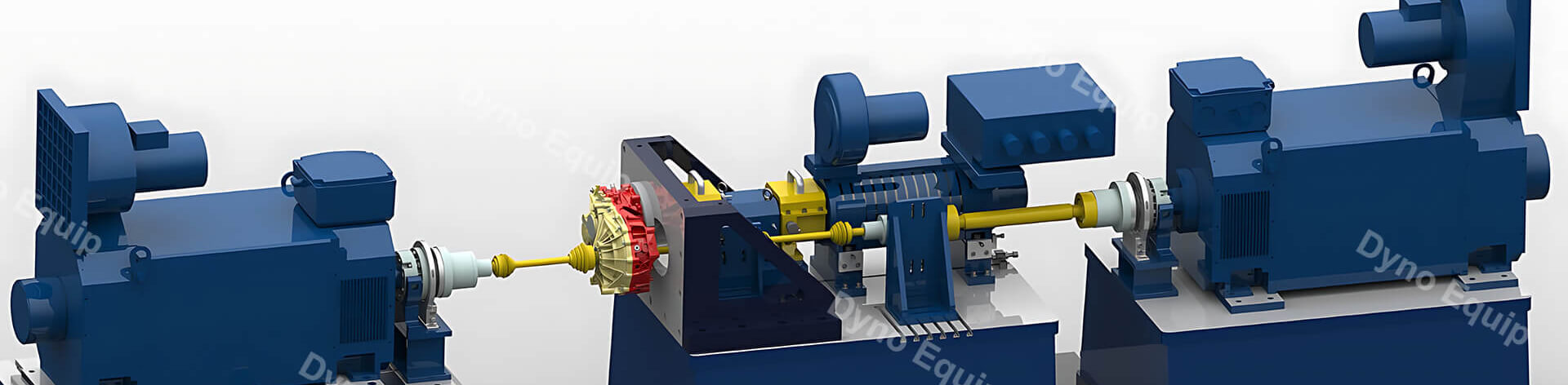
The inverter, reducer, and electric motor are integrated into the electric axle, also known as the electric drive unit (EDU) for e-mobility. The most advanced electric axle systems are small, have the maximum power density, and are tuned for driveability, performance, and efficiency. The integrated electric axles constitute a subsystem in which testing would be impossible if the individual parts were kept apart. In order to test inverters, e-motors, and reducers for service life, performance, and thermal behavior, the test system must thus meet all specifications and test standards.
Either a single motor or dual motor electric axle may be developed and validated using the electric axle performance test stand, which is a made-to-order solution. For in-service lifespan and thermal endurance testing, as well as for studying electrical, mechanical, and thermal properties, the client may be more productive with the shortest delivery time. Two dynamometers are mounted on a single common frame to serve as the load system. This frame may be installed on any industrial floor and doesn’t require a particular pit.
Powertrain test stand
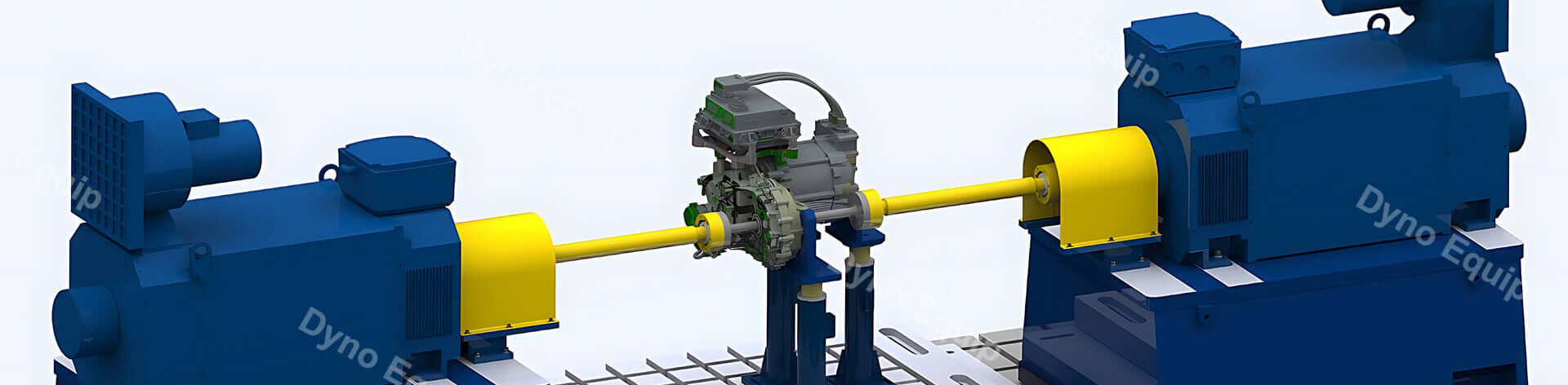
Whether it is a 2WD, 4WD, speed, torque, power class, or an electric powertrain system, our state-of-the-art powertrain test stands are designed to certify any sort of powertrain system. By simulating real-world driving circumstances, replicating road data, or doing time-lapse testing, the dynamometers provide speed and torque to the drivetrain system. A major reduction in the time required for design and validation is achieved by the hardware and software optimized toolchain. With the right virtual environment, testing may be done at the early stages of development. This reduces the possibility of design modifications at a later stage of the project’s development.
EMC test systems
The integration of a growing amount of electrical and electronic subsystems into vehicles has become a more challenging task for the automobile industry in recent years. Additionally, the complexity and interoperability of systems like passenger safety, driving assistance, and internal and external communication interfaces are rising dramatically. Uninterrupted functioning of high-power electric drives under all circumstances, even near extremely sensitive communication systems, is one of the main challenges the industry has to solve.
Regulations about vehicle electromagnetic conformance (EMC) are constantly being updated to minimize the interplay between various electric systems. OEM requirements are being utilized more often to ensure that EMC standards are met. For this reason, for e-mobility vehicles and their subassembly groups, EMC monitoring needs to be taken into account from the very beginning of development.
With constant attention to compliance with the most recent EMC regulations, DynoEquip has broadened its range of EMC test equipment to include anything from the entire electric vehicle or hybrid vehicle to individual parts. To allow pre-compliance EMC testing on traditional performance test stands, we have also developed essential services.
E-motor EMC test solutions for e-mobility
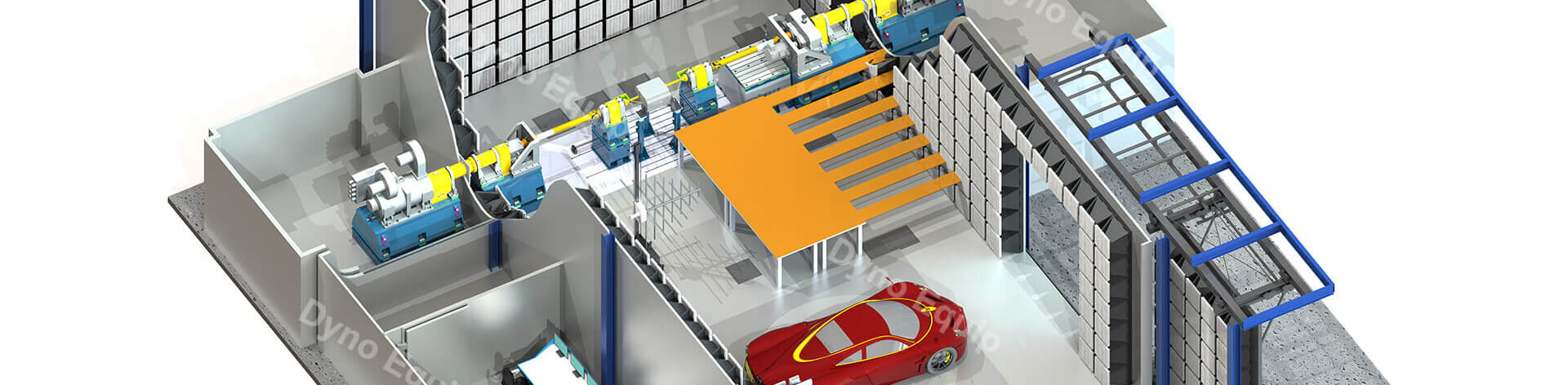
We leverage our extensive, multidisciplinary expertise to achieve unprecedented loads and speeds in EMC component testing. This allows us to cover a broad variety of performance classes when combined with our extensive array of standardized load solutions. The e-motor EMC test stand for e-mobility allows for the best repeatability of load circumstances and has a strong correlation with EMC standards because of its superior torque and speed control. In the end, it’s a feature-rich platform for developing e-motors. Two optional solutions are available from DynoEquip: mobile configuration and fixed installation.
The capacity to conduct full load EMC testing in current EMC anechoic chambers without requiring significant changes is the primary characteristic of the e-motor EMC mobile test equipment. High efficiency is achieved because of the system’s mobility, which enables a thorough pre-setup outside and transfer into the chamber.
Furthermore, EMC testing in compliance with the most recent requirements is made possible by our adaptable, modular e-motor EMC fixed test equipment. Additionally, it serves as a completely functional development environment for e-motors with maximum performance of up to 20,000 rpm, 4,500 Nm of torque, and 700 kW of power.
E-axle EMC test solutions
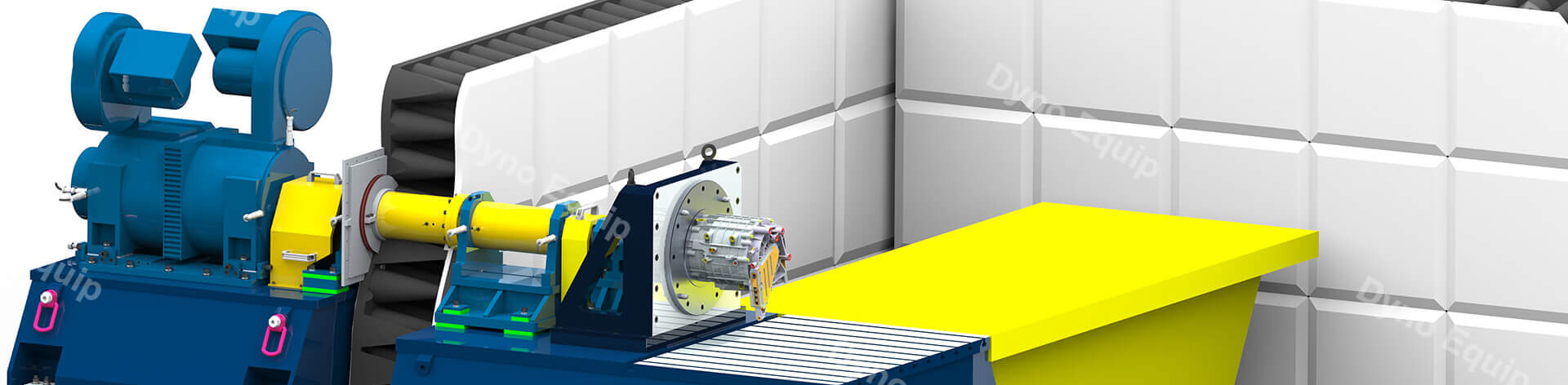
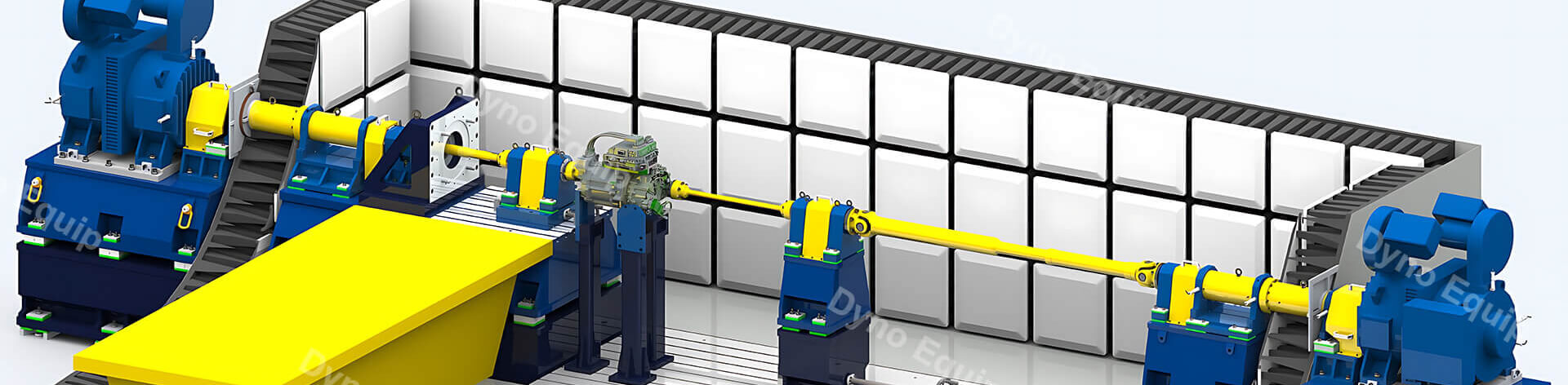
Expanding upon the successful idea of the fixed e-motor EMC testing solution is the electric axle EMC test system. Easy adaptation to varying track widths and extension levels of the Unit Under Test (UUT) is possible thanks to the adjustable shaft installation. All performance classes in our dynamometer range may utilize scalable solutions, which can be expanded to 5,000 Nm and 3,500 rpm. Sufficient room is left for measurements from various positions due to the slim design.
At the same time, the shaft system’s configuration and the EMC chamber design are both customizable to meet the demands of individual clients. Combinations with other EMC test system types in the EMC range and turntables are made possible by the retrofittable shaft system.
With its modular design, the electric axle EMC mobile test system is composed of moveable units. All that is required to start a test is to swiftly dock and lock each dynamometer unit into its appropriate location within the EMC anechoic chambers.
Vehicle EMC test solutions
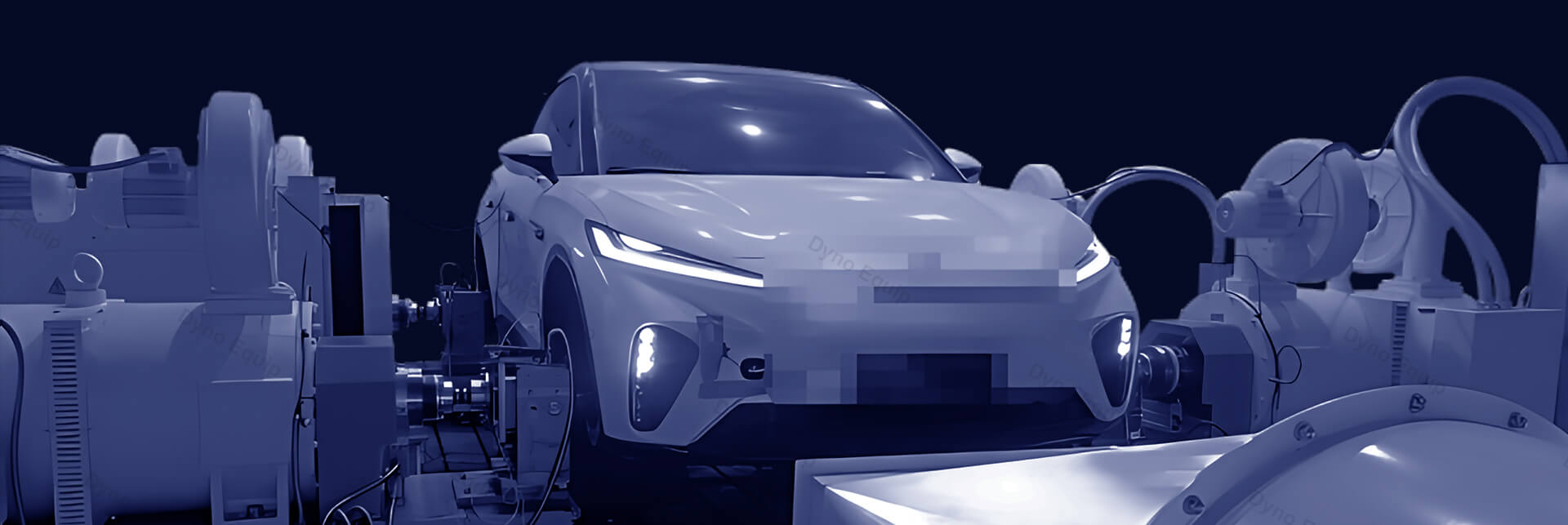
For EMC testing and type approval testing of 2WD, 4WD, and 3-axle vehicles for e-mobility up to 9,000 kg simulated weight, the EMC chassis dynamometer test stand was developed exclusively. The dynamometer can handle a wide range of electric vehicle or hybrid vehicles, including passenger cars and three-axle commercial trucks with turntable diameters of nine and twelve meters. The electromagnetic radiation surpasses the limits set by CISPR 12, ECE-R10, and GB/T-18387 regulations.
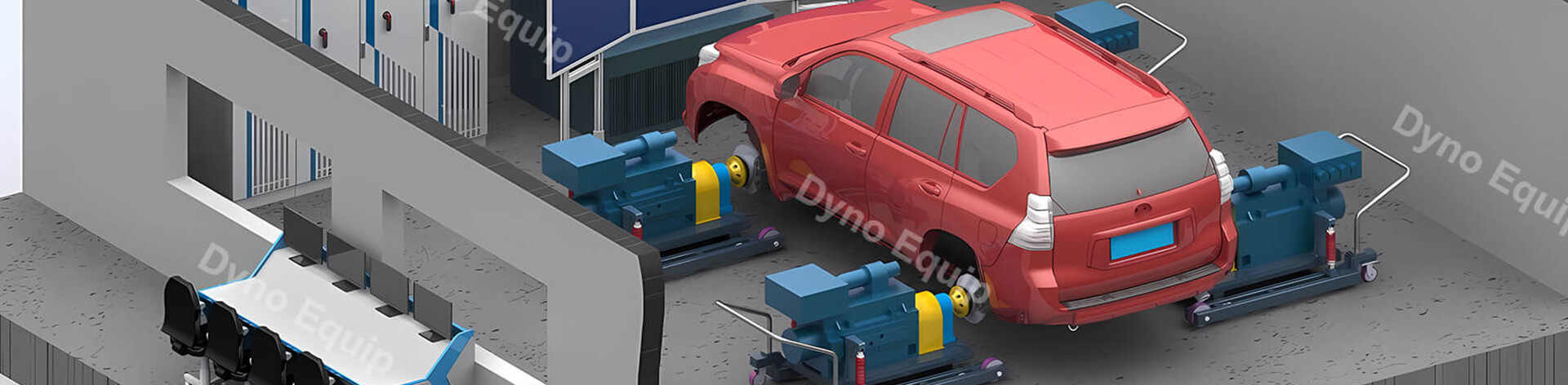
Our EMC mobile chassis dynamometer may be mounted to a turntable or used as a stand-alone system since it is designed to function as a standalone. There are two active components for vehicles with either front or rear wheel drive. Every wheel is powered by a different generator or motor. It may be utilized in endurance mode as well as for acceleration and deceleration. For EMI and EMC measurements, the standalone dynamometer can be utilized in an EMC anechoic chamber. Every electronic part is housed in a separate, radio interference-suppressively insulated cabinet.